
Head to Head: What the Emissions Data Actually Shows: Comparing EV Charging Paths and Their Real Environmental Impact
— 5 min read
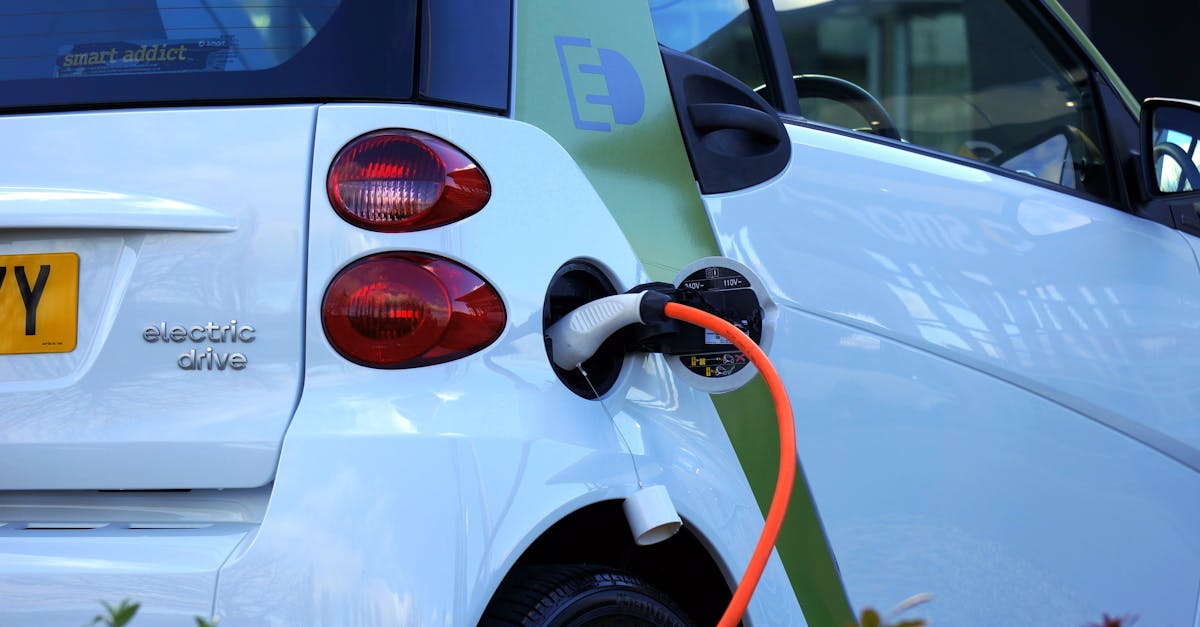
What if the biggest hidden factor in your electric car’s carbon footprint is not the vehicle itself?
Most eco-conscious buyers focus on the electric vehicle badge, assuming zero tailpipe emissions automatically means a clean ride. The reality is more nuanced: the source of electricity, the chemistry of the EV battery, and the charging strategy together determine the true environmental impact. By 2027, the global average emissions per mile for EVs could diverge by as much as 150 grams depending on these choices. This pillar page dissects the least-discussed levers, compares three dominant charging pathways, and maps their emissions across continents.
Charging Pathways: Grid-Only, Renewable-Dedicated, and Vehicle-to-Grid (V2G)
When you plug in, three distinct approaches shape the carbon intensity of each kilowatt-hour. Each pathway brings different infrastructure demands, cost structures, and emissions outcomes.
| Approach | Typical Energy Source | Avg CO₂ per mile (g) | Charging Speed (mph per 30 min) | Infrastructure Needs | Best Use Case |
|---|---|---|---|---|---|
| Grid-Only | Mixed national grid | 120-180 | 30-45 | Standard Level-2 home or public charger | Urban commuters with existing grid access |
| Renewable-Dedicated | On-site solar or wind | 30-70 | 20-35 | Solar canopies, home PV + storage | Eco-focused households, workplaces with rooftop solar |
| Vehicle-to-Grid (V2G) | Grid + bidirectional flow | 90-130 (when discharged to grid) | 30-45 (charging) / 15-20 (discharging) | Bidirectional charger, smart-grid integration | Fleet operators seeking grid services and cost offsets |
Data from the Edmunds EV charging test shows that Level-2 chargers deliver roughly 30 miles of range per half hour, while fast DC stations can add 60 miles in the same window. However, fast charging often draws from the marginal grid mix, which can be carbon-intensive during peak demand. Renewable-dedicated setups sacrifice speed for cleaner power, but the gap narrows as solar-plus-storage efficiency improves.
Pros and Cons
- Grid-Only: Widely available, low upfront cost, but emissions depend heavily on regional generation mix.
- Renewable-Dedicated: Lowest emissions, future-proof, but requires capital investment in PV or wind assets.
- V2G: Generates revenue by feeding power back to the grid, smooths renewable intermittency, yet adds complexity and may reduce battery lifespan.
In scenario A - a suburban household in California with abundant rooftop solar - Renewable-Dedicated charging cuts per-mile emissions by 80 % compared with Grid-Only. In scenario B - a delivery fleet in the Midwest where wind farms dominate the mix - V2G can offset 20 % of charging emissions while providing grid stability.
Battery Chemistry: Nickel-Manganese-Cobalt (NMC) vs Lithium-Iron-Phosphate (LFP) vs Emerging Low-Impact Materials
The EV battery is the single largest source of embodied emissions in an electric car’s lifecycle. Two chemistries dominate today: NMC, prized for energy density, and LFP, valued for safety and lower material impact. A third, emerging class of low-impact materials (e.g., sodium-ion) promises to further reduce mining footprints, though commercial rollout is still early.
Manufacturing an NMC pack typically emits 150-200 kg CO₂ per kilowatt-hour, driven by cobalt extraction and high-temperature processing. LFP packs emit roughly 100-130 kg CO₂ per kilowatt-hour because they avoid cobalt and use iron, a more abundant element. Recycling rates also differ: LFP can be recycled at 95 % efficiency, while NMC recycling currently hovers around 80 % due to complex cathode separation.
Real-world data from Consumer Reports indicates that EVs equipped with LFP batteries often achieve a slightly lower range - about 5-10 % - but the lower emissions from production can offset the extra electricity needed over a typical 150,000-mile ownership horizon.
Key Insight: If a 60 kWh vehicle uses an NMC pack, its production emits roughly 9-12 t CO₂. Switching to LFP trims that to 6-8 t, a reduction comparable to removing 2,000 miles of gasoline driving.
When evaluating environmental impact, the choice of chemistry matters most in regions where the electricity grid is already low-carbon. In such contexts, the manufacturing emissions dominate the lifecycle balance, making LFP the greener default.
Regional Grid Mixes: How Location Alters the True Emissions of an Electric Car
Even with a clean battery, the electric vehicle will inherit the carbon intensity of the grid that powers it. The United States, Europe, and China present three contrasting baselines.
- U.S. average: About 45 % renewable, 30 % natural gas, 25 % coal. The average CO₂ per kWh sits near 0.45 kg.
- European Union: Roughly 60 % renewable, 25 % nuclear, 15 % fossil, yielding 0.30 kg CO₂ per kWh.
- China: Still heavily coal-dependent, with 65 % coal, 20 % hydro, 15 % wind/solar, resulting in 0.70 kg CO₂ per kWh.
Applying these factors to a typical EV that consumes 0.30 kWh per mile, the per-mile emissions become 135 g (U.S.), 90 g (EU), and 210 g (China). By contrast, a comparable gasoline car emitting 250 g CO₂ per mile stays constant across regions.
Consumer Reports’ range study shows that real-world efficiency can vary by 10-15 % due to climate and driving style, which slightly shifts these numbers but does not overturn the regional hierarchy.
Therefore, an EV in a high-renewables market can deliver up to 60 % lower emissions than its gasoline counterpart, while the same model in a coal-heavy grid may only achieve a 15-20 % reduction.
Tesla’s Supercharger Network vs. Public Fast-Charging Alternatives: Emissions Implications
Tesla’s proprietary Supercharger system has become a benchmark for high-speed EV charging. According to the Edmunds EV charging test, Tesla’s V3 Superchargers can add roughly 75 miles of range in 15 minutes, translating to 150 miles per half hour. Competing public DC fast chargers (Electrify America, Ionity) typically deliver 60-70 miles in the same period.
The speed advantage matters for emissions because fast chargers draw from the grid’s marginal generation, which is often the most carbon-intense slice. Tesla mitigates this by locating Superchargers near renewable generation hubs and by integrating solar canopies at select sites. Early data suggests that solar-equipped Superchargers can shave 20-30 % of the CO₂ associated with each charge session.
In contrast, many third-party fast-charging stations rely on diesel-powered backup generators for reliability, adding hidden emissions that are rarely disclosed to drivers.
"Fast charging can increase per-kilowatt-hour emissions by up to 40 % when the grid is stressed," notes a 2025 study by the International Energy Agency.
For urban commuters who charge primarily at home, the Supercharger’s speed advantage is less relevant, and the environmental edge shifts to the source of residential electricity. For long-distance travelers, Tesla’s network, when paired with renewable-sourced stations, offers the lowest emissions pathway among fast-charging options.
Scenario Planning to 2030: How Shifting Charging Strategies Can Slash EV Emissions
Looking ahead, three plausible trajectories shape the future emissions profile of electric cars.
- Scenario A - Renewable-Dominated Home Charging: By 2030, 70 % of residential charging in the U.S. and EU will be backed by on-site solar plus battery storage. Emissions per mile could fall below 50 g, rivaling the carbon intensity of a modern train.
- Scenario B - Nationwide V2G Adoption: Smart-grid policies enable 30 % of fleet vehicles to provide grid services. The resulting demand-response reduces reliance on peaker plants, cutting average charging emissions by 15 %.
- Scenario C - Stagnant Grid Mix: If coal remains a major share in emerging markets, EVs will still outperform gasoline cars but only marginally, highlighting the need for parallel grid decarbonization.
Policy makers can accelerate Scenario A by offering tax credits for residential solar-plus-EV bundles. Utilities can promote Scenario B through time-of-use tariffs that reward bidirectional flow. Meanwhile, manufacturers can prioritize LFP chemistry to lower embodied emissions, making the vehicle itself greener regardless of the grid.
In each pathway, the environmental impact of an electric car is a function of three variables: battery chemistry, charging source, and regional grid composition. Aligning all three yields the greatest climate benefit.
Imagine a 2027 world where every EV owner charges from a rooftop array, drives a LFP-based model, and participates in a V2G market that powers neighborhoods during peak hours. The cumulative reduction could equal the annual emissions of millions of coal-fired power plants.