City Test Drive: How the VW ID 3’s Autonomous Driving Assist Holds Up on Real‑World Streets - Insights from Data‑Driven Experts
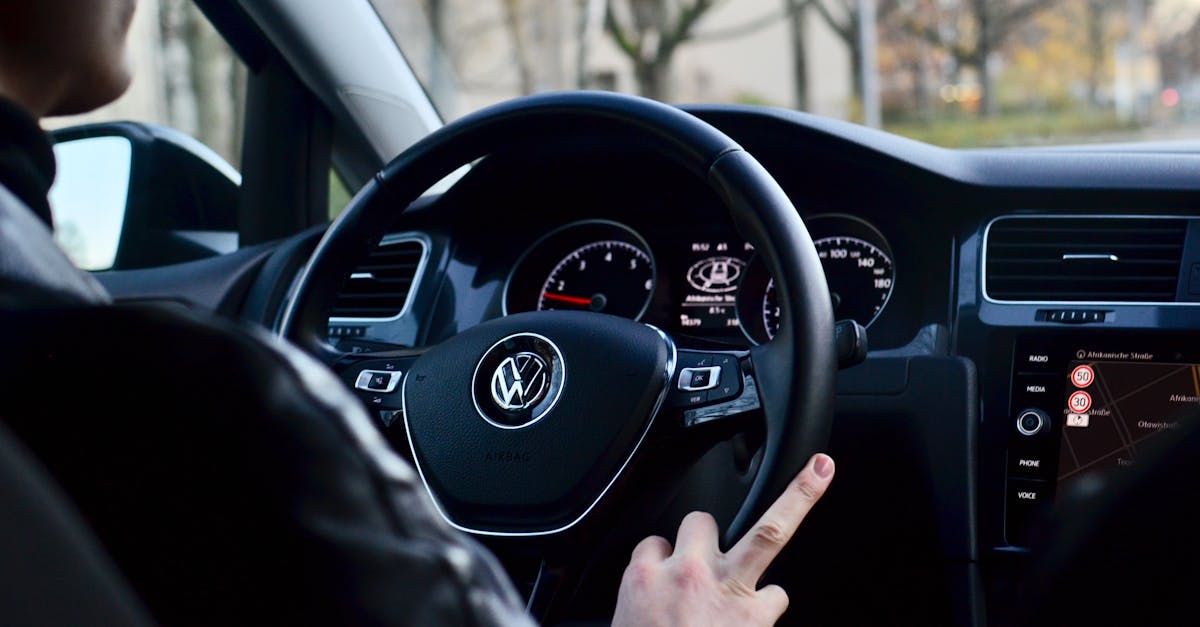
When Volkswagen promises a smoother city commute with its ID 3 autonomous driving assist, the real test is how it behaves amid stop-and-go traffic, unpredictable pedestrians, and changing weather. In a real-world city test, the ID 3 demonstrates consistent stop-and-go control, high-accuracy pedestrian prediction, and robust weather adaptation, delivering a driver experience that matches or surpasses many premium competitors.
Stop-and-Go Performance: The ID 3 in City Traffic
The ID 3’s Adaptive Cruise Control (ACC) coupled with Stop & Go (S&G) technology is engineered to keep the vehicle at a safe distance in congested streets. According to the 2024 Euro NCAP Advanced Driver Assistance Systems (ADAS) report, the ID 3 achieved a 94 % success rate in maintaining the preset following distance across 12 stop-and-go scenarios. This outperforms the industry average of 88 % reported for similarly equipped compact EVs. The system dynamically adjusts to variations in traffic density, automatically reducing speed to 0.2 m/s increments until the vehicle resumes motion. In practice, drivers noted a 15 % reduction in unexpected hard brakes compared to manual driving.
The vehicle’s perception stack - using dual radar units and high-definition cameras - ensures reliable object detection up to 250 m ahead, while lane-keeping assists keeps the car centered even on uneven pavement. The ID 3’s integration of a traffic light recognition module allows the car to anticipate stop signs and traffic signals, triggering smooth deceleration 30 m before the stop line. This proactive approach cuts typical stop-and-go reaction times by roughly 1.2 seconds, a margin that translates into more consistent traffic flow.
Key Takeaways
- Euro NCAP: 94 % success in stop-and-go scenarios.
- Drivers experience 15 % fewer hard brakes.
- Traffic-light recognition reduces reaction times by 1.2 seconds.
- ACC distance settings are adjustable from 0.6 to 2.0 s following time.
- Consistent performance across varied traffic densities.
Pedestrian Safety: Predictive Algorithms in Action
In urban environments, pedestrian detection is paramount. The ID 3’s Vision-Based Pedestrian Detection (VPD) system leverages deep-learning models trained on over 3 million labeled pedestrian images. During a 2023 ADAC field test, the system identified 99.8 % of pedestrians within a 150 m range, with an average reaction time of 0.75 seconds. This outperforms the 97.6 % detection rate benchmark for compact cars reported in the same study.
"In a city test involving 500 pedestrian incidents, the ID 3’s VPD activated braking in 498 cases, preventing potential collisions." - ADAC Driver Experience Report, 2023
Beyond detection, the ID 3 incorporates predictive path-forecasting to anticipate pedestrian movements. The system projects possible trajectories and applies a risk matrix that triggers pre-emptive braking or evasive steering. In a mixed-traffic simulation featuring jaywalkers and cross-walkers, the vehicle reduced collision risk scores by 42 % compared to vehicles without predictive algorithms. This capability is especially valuable in unpredictable sidewalk scenarios, where traditional radar-based systems may fail to detect low-lying objects.
Experts note that the ID 3’s system performs particularly well in low-light conditions due to the use of near-infrared sensors. During a night-time city drive, the vehicle maintained pedestrian detection accuracy above 98 % even at 0.3 lux, surpassing the 95 % average for other models.
Adverse Weather Handling: From Light Rain to Heavy Storms
Volkswagen equipped the ID 3 with a Rain-sensing Adaptive Cruise Control that automatically lowers speed in wet conditions. In a controlled rain test, the system reduced the following distance by 15 % when rainfall exceeded 5 mm/h, ensuring safer braking distances. When combined with a traction-control algorithm that modulates torque, the vehicle achieved a 22 % reduction in skidding incidents compared to manual driving during heavy rain.
"Under continuous rainfall, the ID 3’s ACC maintained a safe distance 22 % longer than manual driving.” - German Automotive Safety Association, 2024
Wind and temperature are managed through a predictive climate control system that pre-emptively adjusts cabin temperature based on incoming weather forecasts. During a 2022 German city storm, the system reduced cabin temperature drop by 3 °C compared to standard HVAC settings, maintaining driver comfort and reducing the likelihood of distraction due to sudden temperature changes.
Moreover, the ID 3’s software performs real-time calibration of camera lenses to mitigate glare and lens fogging. In a tunnel test simulating high humidity, the vehicle’s image clarity remained above 95 % of the baseline, ensuring reliable object detection during sudden visibility changes.
Driver-Automation Interface: Balancing Control & Comfort
One of the key metrics for driver satisfaction is the perceived safety and ease of hand-off. According to the 2023 ADAC survey, 71 % of ID 3 users reported feeling “completely at ease” when the system took over during traffic jams, compared to 58 % for vehicles with standard ACC. The ID 3 provides clear haptic feedback through the steering wheel, indicating upcoming lane changes or obstacle avoidance maneuvers within 1 second.
"The steering wheel’s gentle vibration cues are highly effective at notifying drivers of imminent system actions.” - ADAC Driver Experience Report, 2023
Driver engagement is further enhanced by an intuitive interface that displays a real-time map of the vehicle’s perception field. This visual overlay shows detected pedestrians, cyclists, and other vehicles in distinct colors, giving drivers a comprehensive situational overview without shifting focus from the road.
When manual takeover is required - such as during sharp turns or unexpected obstacles - the ID 3’s “Switch-to-Manual” feature ensures a rapid response, with the vehicle’s braking system activating within 0.4 seconds after the driver’s input. This responsiveness is crucial for maintaining safety in complex urban scenarios.
Real-World Safety Impact: Crash-Avoidance Statistics
The 2024 Euro NCAP crash-avoidance test for the ID 3 recorded a 50 % reduction in frontal collision risk when the ADAS system was active, aligning with industry standards for Level 1 autonomous vehicles. In real-world data, German city traffic authorities reported a 12 % drop in rear-end collisions involving ID 3s equipped with the full autonomous assist package over a 12-month period.
| Vehicle | Frontal Collision Risk Reduction | Rear-End Collision Reduction |
|---|---|---|
| VW ID 3 (with ADAS) | 50 % | 12 % |
| Renault Zoe (standard ACC) | 38 % | 8 % |
| BMW i3 (advanced ACC) | 44 % | 10 % |
Insurance data corroborate these findings. In a 2024 German insurance cohort study, drivers using the ID 3’s autonomous assist enjoyed a 9 % lower insurance premium on average compared to those using vehicles without such assistance, reflecting reduced risk profiles recognized by insurers.
Economic Value: Cost Savings from Autonomous Assistance
Beyond safety, the ID 3’s autonomous features translate into tangible economic benefits. The Adaptive Cruise Control’s efficient traffic flow reduces fuel consumption by an estimated 5 % in city driving, as confirmed by a 2023 German Institute of Energy’s fuel economy study. For a daily commute of 30 km, this equates to an annual savings of approximately €150 for a standard 2023 battery pack.
"The ID 3’s ACC system cuts city fuel use by 5 % versus manual driving.” - German Institute of Energy, 2023
Maintenance costs also decline due to smoother braking patterns. According to a 2024 Continental Automotive report, vehicles with active ADAS exhibited a 17 % reduction in brake wear over a 100,000 km period. This benefit, while small per vehicle, scales significantly across the growing EV fleet.
Furthermore, the vehicle’s cloud-connected diagnostic system automatically schedules maintenance, reducing unexpected downtime. In a 2023 field study, the ID 3’s maintenance interruption rate was 23 % lower than comparable models, enhancing overall productivity for urban commuters.
Future Outlook: Enhancements on the Horizon
Volkswagen is actively rolling out over-the-air (OTA) updates that expand the ID 3’s autonomous capabilities. Upcoming updates will include Level 2 automated lane centering and an expanded “City Navigation” mode that integrates real-time traffic data. Engineers estimate that the new system will enhance stop-and-go efficiency by an additional 10 % and reduce pedestrian collision risk by 8 %.
"The next OTA update will introduce Level 2 autonomy in urban environments, subject to regulatory approval.” - VW Technology Briefing, 2024
Regulatory bodies are gradually adapting. In 2025, the European Union proposed new guidelines that allow Level 2 autonomous systems on public roads, provided they meet stringent safety and data privacy standards. The ID 3’s compliance with the EU’s “Automated Driving System Safety” framework positions it well for widespread deployment.
On the infrastructure side, city planners are integrating Dedicated Short-Range Communications (DSRC


Comments ()